Building a Balanced Indian Plate Without Giving Up Home-Cooked Food
Sustainable nutrition doesn't require replacing dal-roti with expensive imported bowls. Learn how simple visual proportions make everyday Indian meals deeply nourishing.
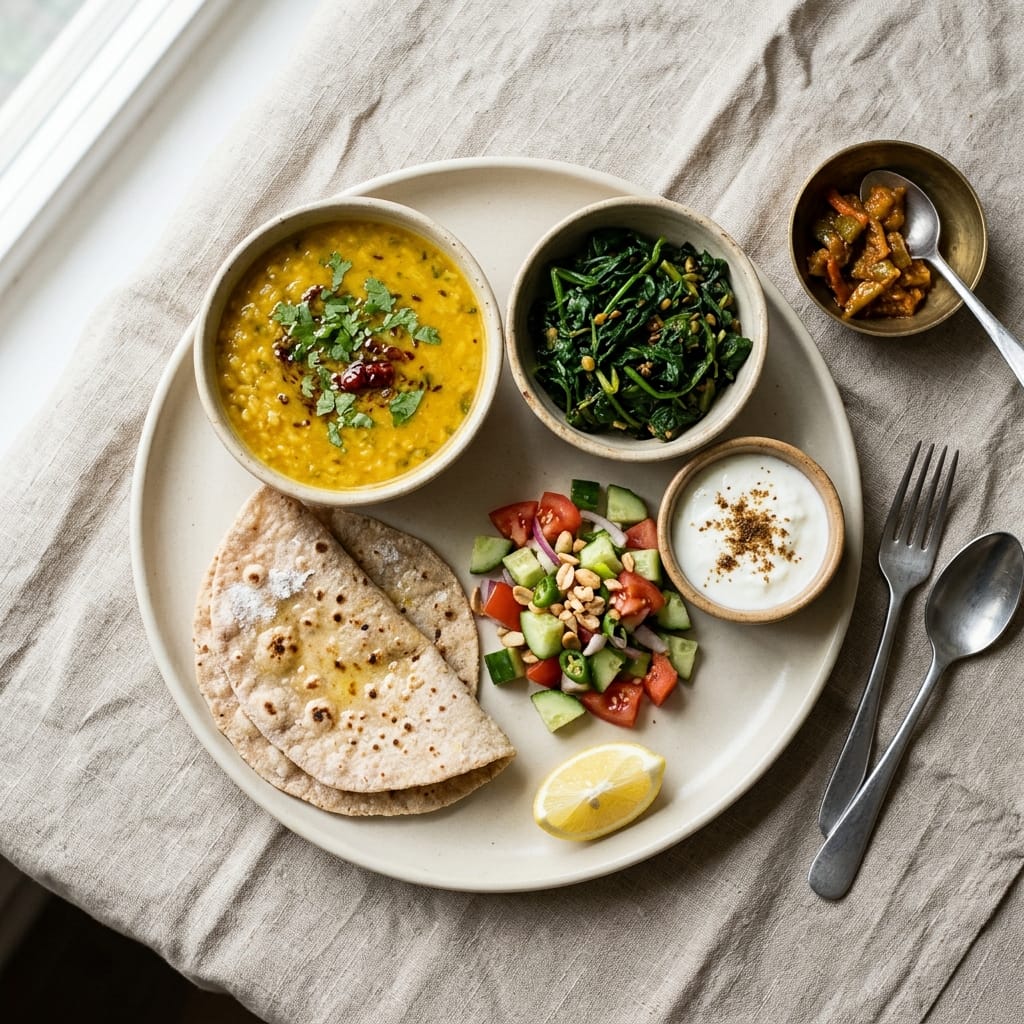
Why Everyday Indian Meals Already Hold the Foundation
One of the most common worries people share during a first consultation is: "Will I have to stop eating regular ghar ka khana?"
Traditional Indian home cooking naturally brings together grains, lentils, seasonal vegetables, fermented dairy, and digestive spices. Challenges usually arise not from the cuisine itself, but from skewed proportions—plates heavy on refined carbohydrates with very little fibre or protein, rushed mealtimes, or frequent reliance on deep-fried snacks between meals.
A Simple Visual Guide to Your Thali
Instead of weighing every gram on a kitchen scale, start by looking at how your plate is divided:
- Half the plate — Non-starchy vegetables: Include a generous serving of cooked seasonal sabzi alongside fresh koshimbir, cucumber, tomato, carrots, or leafy greens. Fibre slows digestion gently and helps meals feel genuinely satisfying.
- One quarter — Quality protein: Dal, rajma, chana, sprouts, paneer, curd, buttermilk, eggs, or lean fish/chicken depending on your household diet. Pairing grains with pulses or dairy improves both fullness and steady energy.
- One quarter — Whole grains or millets: Jowar, bajra, ragi, whole wheat rotis, or modest portions of rice—chosen according to your activity level and digestion.
- Thoughtful fats & kitchen spices: Moderate amounts of cold-pressed cooking oil or homemade ghee, plus spices like turmeric, jeera, ginger, and curry leaves that support flavour and warmth.
Consistency Matters More Than Perfection
At Be Active Wellness Centre, our philosophy is simple: Healthy Today for a Healthy Tomorrow. You don't need an extreme menu overhaul overnight. Start by adding one extra vegetable serving and a clear protein source to lunch this week, chew slowly without screens, and notice how your afternoon energy shifts.
Educational Note: This article reflects general holistic nutrition and lifestyle awareness from Be Active Wellness Centre. It is not intended as individualised medical advice or diagnosis.